A History of the Krepela Family Through Food
by Lawrence Krepela
https://www.youtube.com/watch?v=vRhgFjp2dc0
After the exciting events of this past weekend, the matriarch of my dad’s side of the family, Aunt Janet, spoke to me about the “importance of carrying on the Krepela family tradition.” (Recchio) My Aunt Janet is the eldest of four children, my father being the final and only boy. Aunt Janet’s father, (to keep it simple for the rest of this post we will say my grandfather), was a New York City fireman, as was my father. I have already taken the test and want to be a fireman as well!
(Recchio) “Growing up was wonderful. We had a great life… as little kids we would go out to Bohemia in Suffolk County on the South Shore. It was a Czechoslovakian town. That’s where your great grandparents lived. Every Sunday the three brother would go to Harding Street in Bohemia for dinner. There was not even a question, that was tradition.”
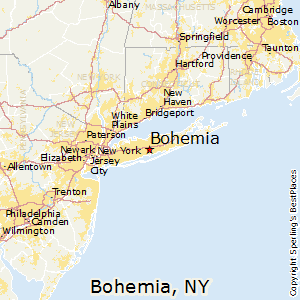
As a child Aunt Janet would head out to her grandparents house (we will call them Baba and Jedu) in Bohemia, Long Island. Bohemia is in Suffolk County near the South shore (see the image on left?). From when immigrants arrived until the mid-twentieth century Bohemia was a Czechoslovakian town. For some quick geographical reference what was once Austria-Hungary became Czechoslovakia after WWI. In 1993 Czechoslovakia was peacefully split into Slovakia and the Czech Republic in what was called the velvet revolution. Baba and Jedu were born in Krumlov and left from Prague a little after Austria-Hungary had transitioned into Czechoslovakia. Potential reasons could have been the rise of communism or unemployment. Most of the Krepela family up until my Aunt Janet spoke fluent Czech. Not teaching any Czech to the younger generation “was done on purpose so family business could be discussed with no interference from the children.” (Recchio)


For cooking Baba and Jedu had a little house on Harding Street. To the right is a picture of Baba! The streets leading up to the house were gravel. The house had a tiny kitchen with a little stove and refrigerator. Appliances were so different back then from how they are today. For example, there used to be no garbagemen so Baba and Jedu would have to burn their own garbage in a five foot high rusted pail. What was burned then had to be brought somewhere my Aunt Janet was never taken to. Something my grandparents had that Baba and Jedu did not was a larger stove and a gas grill. However, to this day my Aunt Janet prefers the old fashioned pot to boil water and oil from her childhood over an insta-pot or air fryer that the younger generation has latched onto today.
Every Sunday or holiday without exception the Krepela family would head from Queens to Harding Street for family dinner. It’s ironic that the Krepela family has been commuting from Queens to Long island and vice versa since the time of my Baba and Jedu. As Twitty notes “food is often a necessary vehicle between one’s ancestors or the spiritual forces that guide their destiny.” (Twitty 153) My Aunt Janet remembers having “the best times running in the fields and playing with my cousins.” (Recchio) It is important to mention that while Long Island is becoming more dense it was once mostly farmland. Baba and Jedu had vegetable gardens all over the place and were real farmers from Czechoslovakia. Aunt Janet remembered picking pears, poppies, and calarabis. Some vegetables they grew were tomatoes, cucumber, squash, green beans, yellow beans, lima beans (my Aunt Janet’s favorite!) amongst other herbs. On part of the property were vast grape vines Baba would make jellies and cakes from. Women were in charge of picking fruits like grapes, blueberries, raspberries and even mushrooms. Another feature of the homestead was the chicken coop which served as a source of fresh eggs. In order to have dinner, my grandfather or one of his brothers “would have to catch a chicken and cut it for it to be de-feathered and cooked by my grandmother or one of her sister-in-laws.” There was no doubt that cooking roles were gendered and that food culture used to define how men and women would act (Inness 9). Across the street was a potato and bachelor button farm for flour. Bear in mind supermarkets used to be sparse and the community depended on each other for various foods. My Aunt Janet sweetly recounts they would go “up the street! or upstreet!” to buy from different farms. (Recchio)
(Recchio) “Whatever they had they had to grow. Anything else they would go up the street to get the potatoes from the farm. Nothing was bought from the supermarket. Going to the supermarket was a huge deal. It was a once a month trip.”

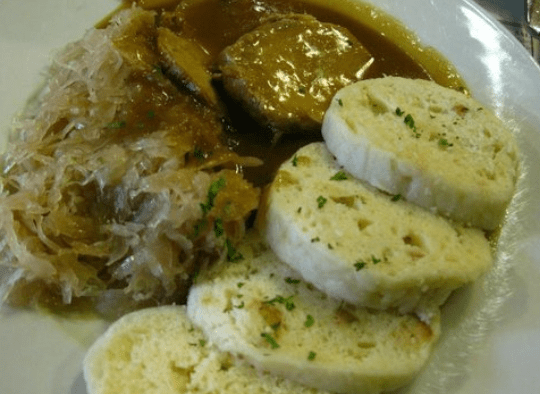
An important food my Aunt Janet remembered was knedlíky a zelí which is Czech for dumplings and sauerkraut made from sweet and sour cabbage amongst other ingredients. My Aunt Janet still makes knedlíky a zelí to this day and has the original recipe from my grandmother. My Aunt Janet made knedlíky a zelí (see imageon left?) and doing this interview now it feels as thought that meal “was like a part of my ancestors suddenly came back from the dead and demanded I not only acknowledge them, but bring them back from obscurity.” (Arellano 26) Pork loin seasoned with garlic and caraway seeds was a staple food of the family as well. Caraway seeds are traditionally a “big deal” in Czechoslovakian foods for their flavor. On Easter and Mother’s Day the Krepela family would get dressed up “hats and all” and walk together up the street to the Czech restaurant. Aunt Janet also remembered a Czech bakery called Chedney’s (unsure of exact spelling) which has since burnt down that sold houska bread, lemon poppy seed cakes and koláč.
My Aunt Janet still carries on gardening to this day as my grandfather loved gardening too! This summer my dad and I will head to Aunt Janet’s to build a substantial garden as a fun hobby and a way to carry on tradition. Hopefully some other family members will want to pitch in as well! Another way my dad and I carry on tradition from my grandfather is fishing and clamming. My grandmother made a delicious clam chowder my dad still has the recipe for and uses sometimes. Baba and Jedu were never into fishing so my Aunt Janet believes fishing was a hobby my grandfather picked up from friends in the firehouse. My grandfather and father learned most of their cooking from the firehouse too since their were no women to cook. Whereas the woman mostly cooked in my Baba and Jedu’s time, the firehouse forced a change in cooking perspective for my family.
(Recchio) “We had a garden wherever we lived… everything with my father was gardening. He loved fishing. We always had fish on the grill with vegetables.”
Regardless, instead of fishing, Baba and Jedu were into crabbing. From Bohemia, Baba and Jedu would travel to Sayville docks or Blue Point Beach and crab. On Sunday afternoons in the summer my grandfather and his three brothers would bring back giant crabs. My Aunt Janet recounts a fond memory of sitting under the grape vines while the brothers brought giant crabs back. There was a big concrete stove out in the field because indoor stoves did not exist at the time. The brothers would boil up a large pot of water to cook the crabs while the women would set up two wooden tables and cover them with paper. The men would drink beer while the women had other drinks and the kids would sit under the grapevines and eat crabs.
(Recchio) “The four brothers would go crabbing on a Sunday afternoon in the summer. My grandparents had grape vines in a large field where the kids would play. We would sit under the grape vines and watch grapes fall down… We would sit under that grapevine and eat the crabs all day… all my cousins remember those days, going under the grapevine to eat those crabs. My father loved it and it was silly. Thank God my father did that!”
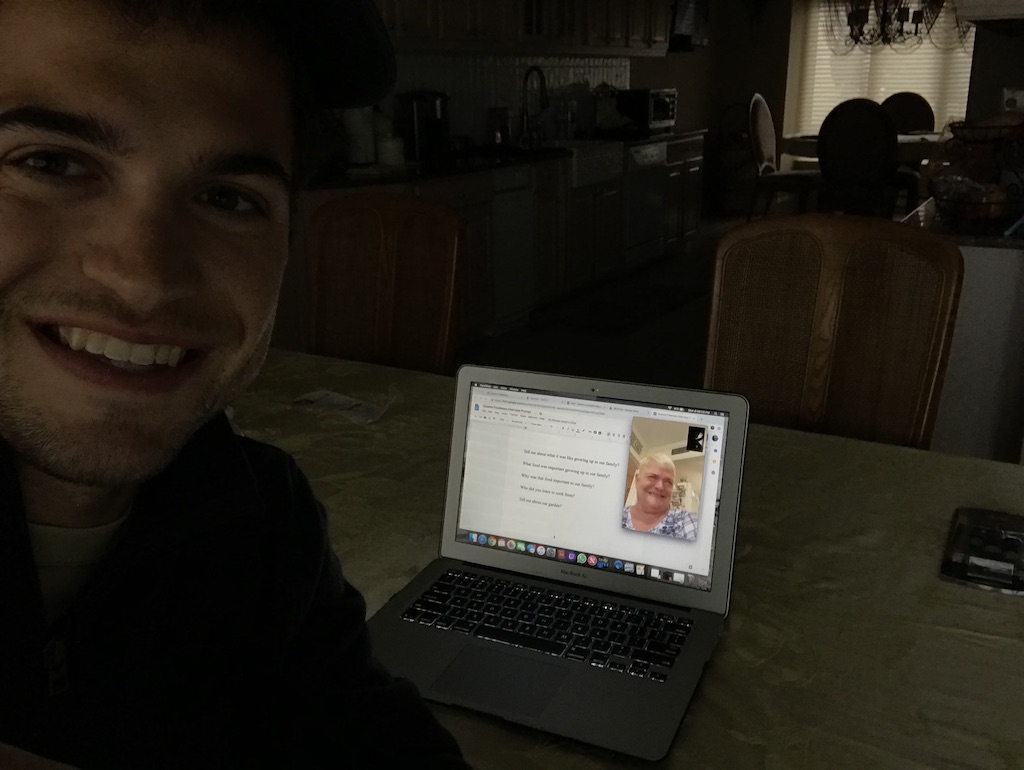
At the end of the interview, Aunt Janet called our conversation “another Easter blessing” showing how much Krepela traditions mean for our family’s past and now our future…
(Recchio) “I have enjoyed this interview so much. I enjoy your recipes and copy them. Anytime you would liketo know something about the past, please call me!”
 | queens foodways |